
On May 22, International Biodiversity Day, a large-scale environmental event took place on the territory of the Danube Biosphere Reserve
— the stocking of the Danube River with Red Book sturgeon species. The initiative was launched by the Odesa Regional State Administration in cooperation with the State Agency of Melioration and Fisheries of Ukraine, the World Wide Fund for Nature WWF-Ukraine, with the participation of Odesa Sturgeon Farming Complex LLC, the Danube Biosphere Reserve, and the State Fisheries Protection Service.
The following were released into the waters of the Danube:
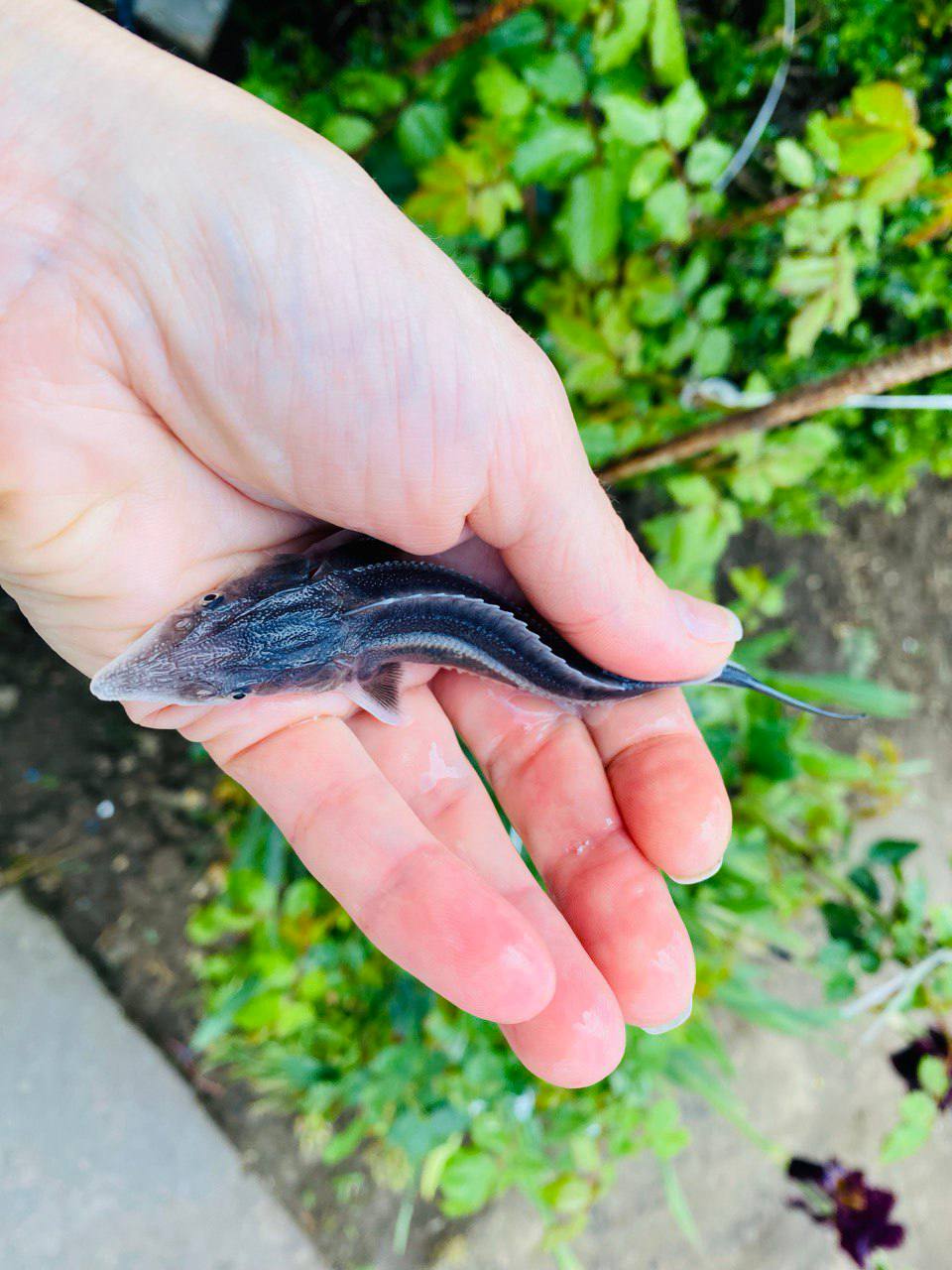
- 18,000 young sterlet individuals (Acipenser ruthenus) weighing up to 3 grams,
- 13,900 young Russian sturgeon individuals (Acipenser gueldenstaedtii), weighing up to 5 grams,
- of which 1,900 sturgeon were supported by WWF-Ukraine.
Sterlet is a freshwater sturgeon fish that never migrates to the sea. Its presence is an indicator of the purity and health of the river ecosystem.
Russian sturgeon is a larger migratory species that historically spawns in the Danube and winters in the Black Sea.
Both species are listed in the Red Book of Ukraine and are under international protection in accordance with CITES, the Bern and Bonn Conventions.
Why is this important?
May 22 is International Biodiversity Day, established by the UN to draw attention to the problems of species loss on the planet. That is why this date became significant for the restoration of rare populations in the Danube Delta – one of the most important biodiversity regions in Europe.
The International Union for Conservation of Nature (IUCN) has recognized sturgeon as the most vulnerable group of species on Earth: 23 out of 26 species are on the verge of extinction.
Of the 26 species existing in the world, six historically lived in our waters: common beluga, common stellate sturgeon, freshwater sterlet, Russian sturgeon, Atlantic sturgeon, and ship sturgeon. All of them are listed in the Red Book of Ukraine. The latter two are officially recognized as extinct in Ukraine.
Poaching, destruction of natural spawning grounds, and dam construction that blocks migration routes are the main reasons for the disappearance of sturgeon from our planet.
Stocking the Danube with sturgeon has important ecological significance:
- Sturgeon are among the oldest inhabitants of rivers, and almost all of their species in Europe are on the verge of extinction. Stocking helps restore their natural populations, including those species that have almost disappeared from the wild.
- Ukraine is a participant in international sturgeon conservation programs (including CITES), and stocking is part of these efforts. This strengthens the country's position as a responsible environmental partner.
More about stocking
Sterlet and Russian sturgeon fry were fertilized, incubated, and grown at Odesa Sturgeon Farming Complex LLC. The fish have proven Danube origin.
Due to their small size (up to 5 grams), they are not yet subject to individual marking or chipping — but at this stage of development, they have the highest chances of adaptation in the natural environment, as they better master new conditions and develop natural behavior from the very beginning.
“This is the largest stocking we have carried out together with partners during the war. We are grateful to the Odesa Regional State Administration for its clear position, and to WWF-Ukraine for its systemic support. These fish are our biological future, and we must take care of it. Because we are not just releasing fish – we are restoring balance in nature. Sturgeon are an "umbrella species," meaning that by protecting them, we protect the entire river ecosystem. The Odesa region was historically home to Danube sturgeon, and we strive to make this a reality again,” emphasizes Viktor Katrechko, director of Odesa Sturgeon Farming Complex LLC.
“Our complex is a unique enterprise for Ukraine. We are the only full-fledged breeding reproducer that has a closed cycle of sturgeon farming. Starting from the reproduction of offspring from formed broodstock, we are able to grow fish from caviar to mature individuals. This allows us to provide genetically pure, healthy young fish for stocking and subsequent monitoring. Thanks to this, we can not only support natural populations but also resist the extinction of these unique species,” adds the head of the sturgeon farm.
“Sturgeon are a symbol of the living heritage of the Danube, species that have survived millions of years, entire epochs and empires, but today are on the verge of extinction. Their return to the wild is not only an attempt to preserve biodiversity but also an important step towards restoring an ecosystem that has given life and resources to millions of people for centuries. It is especially valuable that today the Danube is one of the last rivers in Europe where Red Book sturgeon can still live and reproduce freely. We are grateful to all partners and participants of this initiative. The Danube deserves to be alive, and sturgeon deserve to return to where they belong: to the free, clean waters of the mighty river. Therefore, every such stocking is another signal: we are not giving up. We are working, restoring, protecting. And we want sturgeon to remain alive not only in our memory – but also in the reality of future generations,” explains the head of the "Water" direction of WWF-Ukraine Oksana Konovalenko.
“Sturgeon stocking in the Danube is part of a systemic effort that has been ongoing for many years. After all, the World Wide Fund for Nature WWF-Ukraine has been concerned with the conservation of sturgeon species since 2016. The international project LIFE-Boat 4 Sturgeon also helps us in this, which aims to save four sturgeon species that still remain in the Danube from extinction. During this time, experts from our fund helped identify key sturgeon habitats in Ukraine, achieved their official protection, and strengthened control over illegal trade in sturgeon products and poaching,” says the representative of the Fund.
“For us, this event is not only an ecological initiative but also an important element of systemic work aimed at preserving unique fish species that are endangered,” said the head of the Odesa Fish Protection Patrol Serhiy Tsyganok. “Our specialists ensured control over the stocking process and continue daily monitoring of the situation in the relevant areas.”
“Stocking is only the first stage. In the future, we will focus our efforts on protecting the areas where young sturgeon were released to prevent illegal fishing and violations of environmental legislation. The Odesa Fish Protection Patrol regularly conducts raid inspections, conducts explanatory work among fishermen, and actively interacts with local communities. We have a common goal – to preserve biodiversity and restore natural sturgeon populations in the Danube basin. And we consider this our duty to future generations,” concluded Serhiy Tsyganok.
From the Rhine to the Danube for sturgeon: how a Dutch researcher helps Ukrainian nature
It should be noted that part of the funds for stocking for WWF-Ukraine was provided by volunteer and researcher from the Netherlands Bob Kreiken, who studies international biodiversity policy at Delft University of Technology.
In the summer of 2024, he undertook a two-month expedition across Europe as part of the Strong for Sturgeons campaign: he cycled along the Rhine and then kayaked down the Danube – from north to the Black Sea. This journey was dedicated to raising awareness of sturgeon problems and raising funds for the World Wide Fund for Nature (WWF) – for sturgeon conservation projects in Europe.
“Ukraine is historically home to six species of sturgeon that live in large rivers. But the war is directly related to their disappearance. Firstly, due to the war, it has become much more difficult to maintain international scientific cooperation aimed at preserving sturgeon in the Black Sea basin. Secondly, the war caused large-scale destruction of nature. One of the most dramatic examples is the undermining of the Kakhovka HPP, which destroyed the country's only state sturgeon factory. It was completely flooded. Against this background, when funding for nature conservation in Ukraine has significantly decreased, and in the occupied territories Russia completely ignores environmental laws, poachers have even more opportunities for illegal sturgeon fishing.
In times of war, it is especially important to realize what shapes a nation. The destruction of natural heritage is as tragic as the destruction of cultural heritage. Because if you look deeper, these things are inextricably linked. I sincerely hope that as part of Ukraine's post-war recovery, Europe will also make efforts to restore Ukrainian nature. After all, nature has the power to heal people,” notes researcher Bob Kreiken.
Reference:
The event was held in accordance with the Action Plan for the Conservation of Sturgeon Fish in Ukraine for 2021–2030 as part of Ukraine's obligations under the Bern and Bonn Conventions, as well as the CITES Convention, and became a continuation of many years of cooperation between regional authorities, scientific institutions, and international environmental organizations.
About WWF-Ukraine:
The World Wide Fund for Nature WWF is one of the most influential and largest independent environmental organizations in the world, with over 5 million supporters and offices in more than 100 countries. WWF's mission is to stop the degradation of the planet's natural systems and build a future in which humans live in harmony with nature. This can be achieved by preserving the planet's biodiversity, rational use of natural resources, reducing pollution, and irrational consumption. The "Water" direction of WWF-Ukraine aims to restore freshwater ecosystems in Ukraine to their natural state, which will lead to improved public health and restored biodiversity. This includes restoring the free flow of rivers, wetlands, and ensuring environmentally friendly approaches to hydropower. Another focus of our attention is on studying and protecting habitats important for sturgeon family species.
